

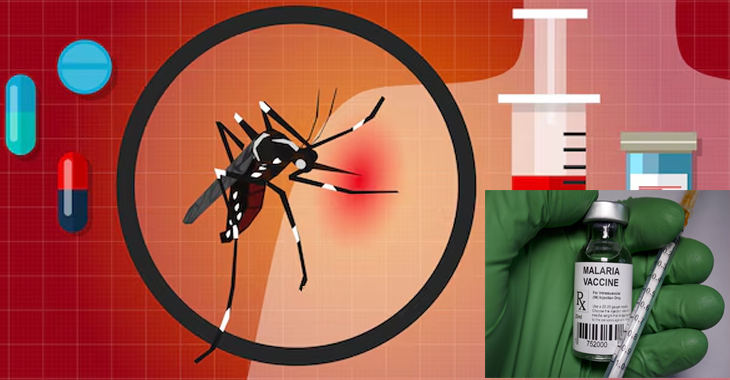
With the creation of AdFalciVax, a novel indigenous vaccine candidate, India has made significant progress against malaria.
In collaboration with the Department of Biotechnology’s National Institute of Immunology (DBT-NII), the Indian Council of Medical Research (ICMR) is developing this vaccine through its institutes, RMRC Bhubaneswar and the National Institute of Malaria Research (NIMR).
A novel malaria vaccine called AdFalciVax targets two crucial stages of Plasmodium falciparum, the parasite that causes the most deadly type of malaria.
The majority of current vaccines only target one stage of the parasite’s life cycle, however AdFalciVax targets both the stage that causes human infection and the one that mosquitoes transmit, offering more robust and durable protection.
The vaccine has performed exceptionally well in preliminary laboratory tests. Researchers think it might have a number of advantages over existing vaccinations including RTS, S/AS01, and R21/Matrix-M.
These include enhanced long-term immunity, increased protection, and a decreased likelihood of the parasite evading the immune response.
Additionally, the vaccine is stable at room temperature for more than nine months, which facilitates storage and transportation, particularly in tropical areas. Alum, which is frequently used as an adjuvant in vaccinations, is another inexpensive chemical it uses.
At the moment, the vaccine is in the preclinical phase. The vaccine may not be available for public use for almost seven years, if all goes according to plan. Clinical testing, regulatory approvals, and manufacturing under stringent safety standards are all part of the development timeline.
AdFalciVax’s utilization of “Lactococcus lactis,” a safe and well-known bacterium utilized in vaccine production, is one of its main advances. Because of its design, it can both prevent people from becoming ill and stop malaria from spreading throughout communities.
Under non-exclusive agreements, the ICMR intends to make the vaccine technology available to other companies and organizations.This implies that several businesses can collaborate on the vaccine’s development, enabling it to reach more people more quickly after approval.
In keeping with the government’s ‘Make in India’ campaign, AdFalciVax is being developed exclusively in India.


Leave a Reply